wrap installation & removal
So, you’ve finally decided to wrap your vehicle. Maybe it’s your first time branding a work truck, maybe you’re re-wrapping your fleet after a rebrand, or maybe you just want your van to look a little less like every other one on the highway. Whatever the reason, wrapping your vehicle is a big move—and like most things that seem simple on the surface, there’s more to it than meets the eye.
It’s not just about picking a bold design and slapping on some vinyl. It’s about precision, timing, temperature, tools, technique—and above all, having the right hands on the job. Because when it comes to wrap installation & removal, one misstep can mean bubbles, peeling corners, or even damaged paint.
A Good Wrap Starts with Preparation
You wouldn’t paint a wall without cleaning it first, right? Same thing goes for a vehicle. Proper wrap prep is everything. That means washing, degreasing, and removing any traces of wax or polish. Every speck of dust, every oily fingerprint—that’s a potential bubble or blemish waiting to happen.
A lot of people underestimate this stage, but it’s the foundation for everything that follows. The surface needs to be smooth, dry, and squeaky clean. That’s non-negotiable.
And let’s not forget about temperature. Vinyl behaves differently in cold versus warm environments. Too hot? It gets stretchy and finicky. Too cold? It cracks or refuses to stick. This isn’t a job for a random Tuesday evening in your driveway unless you’ve got the right setup.
The Art of the Wrap: It’s a Dance, Not a Drag
Here’s the thing: installing a wrap is a little like laying wallpaper on a curved surface… that moves. It’s not just about slapping down large pieces of sticky film. Every edge, curve, handle, and indentation needs to be accounted for.
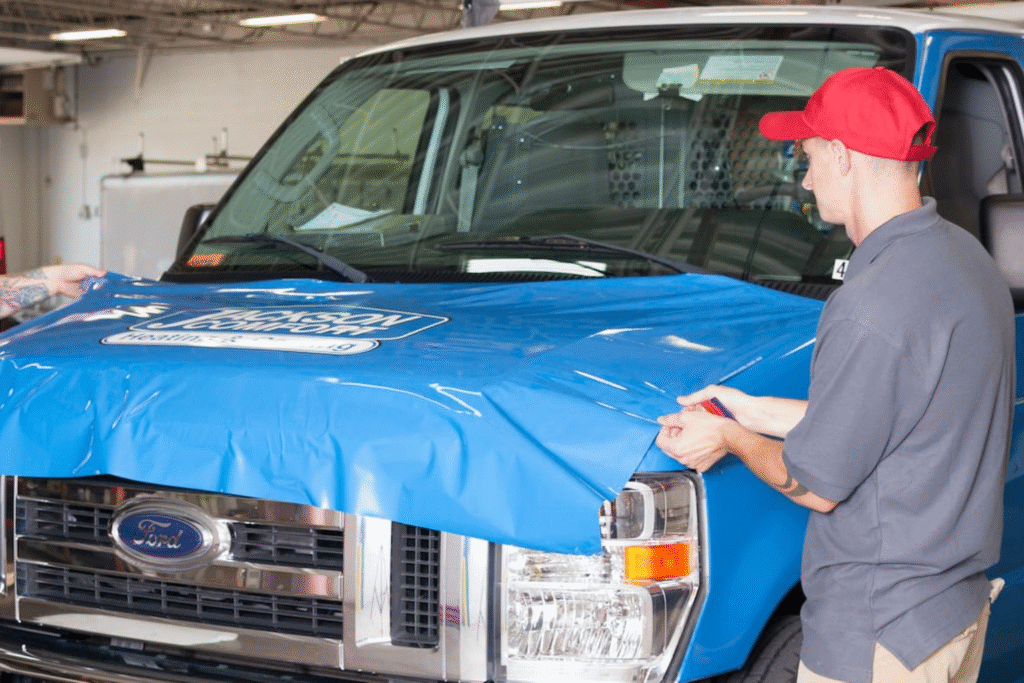
Expert installation is less about speed and more about finesse. The pros know when to apply heat, how to stretch just enough, and how to tuck the vinyl without forcing it. They use squeegees with felt edges, they work panel by panel, and they always double-check alignment before laying the next piece.
There’s a rhythm to it—stretch, smooth, heat, tuck, trim. Repeat. It’s careful. It’s methodical. And when it’s done right, the end result looks like paint—seamless, clean, and durable.
Don’t DIY Your Way Into Regret
We get it. DIY culture is booming, and YouTube makes everything look easy. But wrapping a car or truck isn’t one of those things you want to learn as you go. It’s not about just watching a tutorial or buying a roll of vinyl off Amazon. It’s about hands-on experience.
Why? Because even a tiny slip—say, not stretching properly around a curve or cutting too close to the trim—can turn a thousand-dollar wrap job into a pricey mess. Worst case? You end up damaging your paint during removal or create creases that you can’t “just smooth out.”
Sure, some small decals or partial wraps might be manageable for hobbyists. But for full wraps, business branding, or anything you expect to last more than a few months? Leave it to the pros.
Timing is Everything: From Install to Cure
A good wrap job doesn’t end the moment the last corner is trimmed. Vinyl needs time to cure. This means no pressure washing, no aggressive scrubbing, and ideally, no harsh weather exposure for at least 48 hours post-install.
The adhesive sets slowly. The edges need to bond properly. Rushing this process can cause premature lifting, especially around tricky spots like mirrors, door handles, and wheel wells.
Think of it like baking bread. You don’t just throw it in the oven and yank it out as soon as it looks done. There’s a post-process period that’s just as crucial as everything before it.
When It’s Time to Say Goodbye to the Wrap
All good things eventually come to an end—and wraps are no exception. Maybe the branding changed. Maybe the wrap’s faded. Or maybe you’re selling the vehicle and want to restore its original look.
This is where things can go very wrong—or very smooth—depending on how the removal is handled.
With proper tools, the right heat source, and a little patience, safe vinyl peeling is totally doable. The key is softening the adhesive just enough so the vinyl lifts without resistance. That’s usually done with heat guns or steamers and a plastic removal tool to avoid scratching the paint.
Rush it, or do it with the wrong tools, and you risk leaving behind nasty glue residue—or worse, peeling up paint or damaging the clear coat.
What Makes a Good Wrap Removal Service?
Speed isn’t the only thing to measure here. A solid removal crew will:
- Inspect the condition of the wrap first (age, exposure, damage)
- Determine the safest temperature settings to loosen the adhesive
- Remove vinyl in large, manageable sections
- Use adhesive removers sparingly (so they don’t harm the paint)
- Detail the vehicle afterward to remove any lingering residue
If your wrap was installed well and removed properly, the paint underneath should look nearly brand-new—protected from the sun, scratches, and road grime.
It’s Not Just About the Vehicle—It’s About Reputation
If you’re running a business, a wrapped vehicle is more than just mobile advertising—it’s a moving first impression. People see your vehicle before they hear about your service or read your reviews. So if your wrap’s peeling, bubbling, or discolored, that’s what they’ll associate with your brand.
And if a customer sees two trucks in your fleet and the wraps don’t match—one faded, one fresh—that inconsistency sends a message too. Consistent branding matters. So does quality install and removal.
Whether you’re wrapping one van or a hundred, how they look reflects how you work.
Wraps Shouldn’t Be a Headache
Look, vehicle wraps are one of the smartest investments a business can make. Done well, they deliver constant brand exposure, protect your paint, and make your vehicles stand out in traffic. But when they’re poorly installed or improperly removed? They become expensive, frustrating, and frankly, embarrassing.
So save yourself the trouble. Invest in professionals who understand the full life cycle—from wrap installation & removal to care, maintenance, and beyond.
Your brand deserves better than half-baked vinyl jobs and late-night YouTube wrap tutorials.
Final Thought: Make the Most of Every Mile
A great vehicle wrap turns a drive to the job site into a marketing campaign. It makes your truck look sharp, your brand feel trustworthy, and your business more memorable. But to really get that kind of impact, you need to do it right—from the first squeegee swipe to the final pull-off.