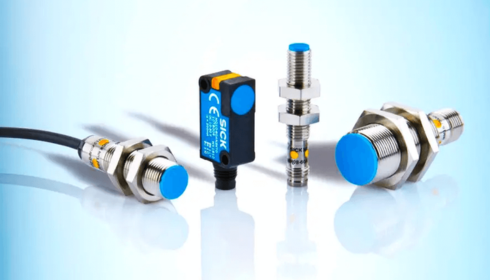
In today’s fast-moving technological world, automation is no longer a luxury—it’s a necessity. From smartphones to industrial machines, the ability to detect objects without physical contact has transformed how systems operate. This is where the proximity sensor comes into play. Quietly working behind the scenes, it ensures safety, efficiency, and precision across countless applications.
What is a Proximity Sensor?
A proximity sensor is an electronic device designed to detect the presence or absence of an object within a certain range—without actually touching it. Unlike traditional switches that require physical contact, these sensors rely on electromagnetic fields, infrared light, or sound waves to sense nearby objects.
You’ve probably interacted with one without even realizing it. Ever noticed your phone screen turning off during a call when you bring it close to your ear? That’s a proximity sensor doing its job. Simple, yet incredibly effective.
How Does It Work?
The working principle of a proximity sensor depends on its type, but the core idea remains the same: detect changes in the environment and convert them into electrical signals.
Related brief: Cybersecurity Due Diligence in Mergers and Acquisitions
For instance, inductive sensors detect metallic objects using electromagnetic fields, while capacitive sensors can sense both metallic and non-metallic objects by measuring changes in capacitance. Ultrasonic sensors use sound waves, and infrared sensors rely on light reflection.
It sounds complex, but the outcome is straightforward—accurate object detection without physical contact.
Types of Proximity Sensors
Not all proximity sensors are built the same. Each type is designed for specific environments and tasks:
- Inductive Sensors – Ideal for detecting metal objects in industrial settings
- Capacitive Sensors – Can detect liquids, plastics, and even powders
- Ultrasonic Sensors – Use sound waves, perfect for distance measurement
- Infrared Sensors – Common in consumer electronics and automation systems
- Magnetic Sensors – Detect magnetic fields, often used in security systems
Choosing the right type depends on what you need to detect and the environment you’re working in.
Understanding Proximity Switch Sensors
While often used interchangeably, a proximity switch sensor typically refers to a sensor that triggers an ON/OFF output when an object is detected. In simpler terms, it behaves like a switch—but without physical contact.
These sensors are widely used in industrial automation. For example, in conveyor systems, they help detect the presence of items and trigger actions like sorting or stopping the belt. The reliability of proximity switch sensors makes them a preferred choice where precision matters.
Key Advantages
One of the biggest reasons for the growing popularity of proximity sensors is their durability. Since there’s no physical contact, there’s minimal wear and tear. That alone significantly increases lifespan.
Other benefits include:
- High accuracy and reliability
- Fast response time
- Resistance to harsh environments (dust, moisture, vibration)
- Low maintenance requirements
In industries where downtime can cost thousands, these advantages make a real difference.
Real-World Applications
Proximity sensors are everywhere, even if we don’t notice them. In manufacturing, they help automate processes and improve safety. In automobiles, they assist with parking and collision detection. In retail, they’re used in automatic doors and contactless payment systems.
Even smart homes rely on them—think motion-activated lights or security systems. The range of applications keeps expanding as technology evolves.
Choosing the Right Sensor
Picking the right proximity sensor isn’t just about cost—it’s about compatibility. You need to consider factors like detection range, target material, environmental conditions, and response time.
For example, an inductive sensor won’t work well for detecting plastic, and an ultrasonic sensor might struggle in environments with heavy noise interference. Understanding your use case is key to making the right choice.
Final Thoughts
Proximity sensors may seem like small components, but their impact is massive. They’ve quietly revolutionized automation, safety, and efficiency across industries. Whether it’s a simple smartphone feature or a complex industrial system, these sensors are the invisible force making things smarter.