A good glass of water shouldn’t be complicated. Yet for many homeowners, filling a glass directly from the kitchen faucet isn’t always appealing. Maybe the water has a slightly metallic taste, or perhaps there’s an occasional odor that makes bottled water seem like a better option.
Over time, buying bottled water becomes another household expense, not to mention the inconvenience of carrying heavy cases home from the grocery store.
It’s understandable why homeowners exploring reverse osmosis systems in michigan are interested in finding a convenient, long-term solution to their drinking water concerns.
Reverse osmosis offers an effective way to reduce various dissolved contaminants when equipment is appropriately selected and maintained. But before installing a system, it helps to understand how the technology works and what it can realistically accomplish.
Why Drinking Water Quality Varies Across Michigan
Michigan is surrounded by remarkable freshwater resources, but that doesn’t mean every household receives water with identical characteristics.
Water quality can vary depending on the source, local geology, treatment processes, and condition of residential plumbing.
Homes connected to municipal supplies may experience chlorine-related taste concerns, while properties relying on private wells might encounter excessive minerals, sediment, or naturally occurring contaminants.
Older plumbing can introduce additional concerns, including potential exposure to lead.
Related brief: Plumbing Warning Signs You Should Never Ignore at Home
What’s particularly important is that water appearance doesn’t always reveal these problems. A perfectly clear glass of water may contain dissolved substances that aren’t noticeable through taste or smell.
Reviewing municipal water quality reports or arranging appropriate laboratory testing can help homeowners understand their particular circumstances before investing in treatment equipment.
How Reverse Osmosis Works Beneath Your Kitchen Sink
Despite its rather technical name, reverse osmosis operates on a relatively straightforward principle.
Water pressure forces water through a semipermeable membrane that allows water molecules to pass while reducing many dissolved substances. The rejected substances are carried away in a separate wastewater stream.
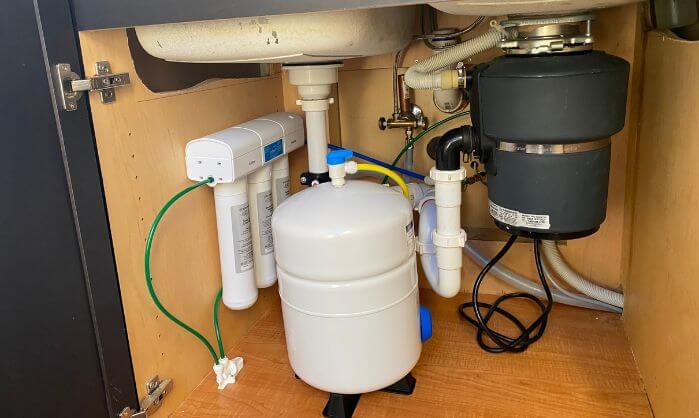
Many homeowners prefer under-sink reverse osmosis filtration because it provides dedicated drinking water treatment without occupying valuable kitchen countertop space.
A typical residential system includes preliminary filters, a membrane, and a dedicated drinking water faucet. Some models also incorporate storage tanks, while others operate using tankless designs.
The arrangement makes treated water readily available for drinking, preparing meals, and filling the coffee maker.
It’s a convenient addition to the kitchen, especially for households that regularly purchase bottled drinking water.
What Can Reverse Osmosis Remove From Drinking Water?
One reason reverse osmosis is popular is its ability to reduce a broad range of dissolved contaminants that ordinary mechanical filters cannot adequately address.
Depending on the system’s verified performance, reverse osmosis may reduce lead, nitrates, fluoride, arsenic, dissolved salts, and certain other substances.
However, not every model delivers identical results.
When considering home drinking water purification, homeowners should look for independently certified equipment that addresses the particular contaminants identified in their water supply.
Pay attention to specific reduction claims rather than broad promises about completely pure water.
Reverse osmosis also has limitations. Certain water conditions may require pretreatment, and microbial contamination concerns need an appropriately designed treatment strategy.
Understanding these details helps establish realistic expectations and prevents unnecessary equipment purchases.
The Everyday Benefits Go Beyond Drinking Water
The advantages of improved drinking water often become noticeable during ordinary household activities.
Coffee and tea may taste more enjoyable when unwanted flavors are reduced. Treated water can also be convenient for preparing soups, cooking rice, and making homemade beverages.
For families that frequently purchase bottled water, having a dedicated drinking water faucet may reduce their reliance on disposable plastic bottles.
There’s also the convenience factor. Nobody particularly enjoys realizing they’ve run out of bottled water halfway through preparing dinner.
Having treated water available directly in the kitchen can make those little inconveniences less common.
Of course, taste preferences vary, and some people prefer water containing more naturally occurring minerals.
Choosing a System That Fits Your Household
Before purchasing reverse osmosis equipment, take a look beneath your kitchen sink. Is there enough room for the system, its connections, and any required storage tank?
Consider your family’s daily drinking water consumption as well.
A household of six will probably have different requirements from someone living alone. Production capacity, incoming water pressure, operating efficiency, and replacement filter costs all deserve attention.
Reverse osmosis produces wastewater during treatment, so comparing water efficiency between models is also worthwhile.
Additionally, homeowners with particularly hard water may need suitable pretreatment to help manage membrane scaling.
A qualified water treatment specialist can help assess these practical considerations before installation.
Regular Maintenance Keeps Your Drinking Water System Reliable
Reverse osmosis equipment requires periodic attention, even when the treated water continues tasting perfectly normal.
Preliminary filters eventually reach their service limits, and membranes gradually lose performance. Replacement schedules depend on water conditions, equipment specifications, and household consumption.
Follow manufacturer servicing recommendations and keep a simple record of maintenance dates.
For systems addressing health-related contaminants, appropriate follow-up testing helps verify continued treatment effectiveness.
If you notice declining water production or recurring unpleasant tastes, arrange an inspection rather than ignoring the changes.
A little preventative maintenance can help extend equipment life and avoid unexpected interruptions.
Making a Practical Investment in Better Drinking Water
Reverse osmosis filtration isn’t necessarily something every Michigan household needs. Its value depends on your existing water quality, drinking water preferences, and specific treatment objectives.
Start with reliable information, compare equipment carefully, and consider the long-term responsibilities of owning a filtration system.
The best solution isn’t always the most expensive one. It’s the one that addresses your actual concerns without making everyday life unnecessarily complicated.
After all, there’s something genuinely satisfying about walking into your kitchen, turning on the faucet, and enjoying a refreshing glass of water without giving it a second thought.