There’s something frustrating about buying a water filter and discovering that it only solves half the problem. Perhaps your drinking water tastes better, but sediment still collects around bathroom fixtures. Or maybe the water looks clearer, yet an unpleasant odor remains. Water quality can be complicated, and sometimes a single filtration method simply isn’t enough.
Modern systems incorporating advanced multi-stage filtration technology allow homeowners to address several water quality concerns through different treatment processes working together.
Rather than expecting one filter to accomplish everything, these systems use specialized components for particular tasks.
For Burton homeowners considering better water treatment, understanding how these components work together can make equipment selection less confusing and considerably more rewarding.
Why a Single Water Filter Isn’t Always Enough
Water can contain a mixture of suspended particles, dissolved minerals, and other substances that influence its quality. Each may require a different treatment approach.
Sediment, for example, consists of physical particles that can be trapped by suitable filtration media. Dissolved substances are a different matter entirely.
Calcium and magnesium, which contribute to hardness, generally pass through ordinary sediment filters.
Similarly, removing visible particles doesn’t necessarily eliminate unpleasant tastes or odors.
That’s where multi-stage treatment becomes useful. By combining appropriate technologies, homeowners can address several concerns within one coordinated arrangement.
Related brief: Better Water at Home: Finding the Right Balance Between Whole-House Filtration and Drinking Water Systems
However, installing additional filters simply for the sake of having more treatment stages isn’t particularly sensible. Each component should address an identified problem.
Understanding the Water Your Household Uses
Before investing in equipment, take a closer look at your everyday water experiences. Does your water occasionally appear cloudy? Are you constantly cleaning mineral deposits from bathroom fixtures? Perhaps there’s a noticeable taste whenever you fill a drinking glass.
Effective filtration for household water quality starts with understanding these concerns through appropriate testing and selecting equipment according to the results.
Basic screening may provide useful information about hardness, iron, and pH. More comprehensive laboratory analysis may be necessary to identify potentially harmful contaminants.
Homeowners relying on private wells should pay particular attention to microbial testing and other locally relevant water quality concerns.
Reliable information helps prevent unnecessary purchases and gives homeowners a clearer understanding of what their treatment equipment needs to accomplish.
Finding a Whole-House System That Fits Your Lifestyle
Every household has different water consumption habits. Some families run several appliances simultaneously, while smaller households may have relatively modest daily requirements.
When comparing whole-home filtration options, consider incoming water conditions, peak water demand, available installation space, and the long-term cost of maintaining the equipment.
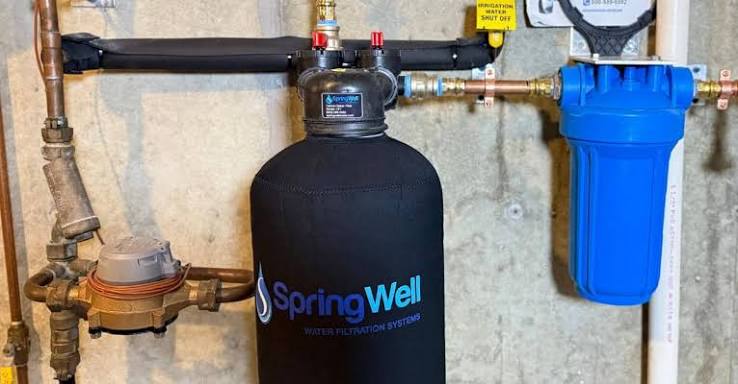
Centralized systems are typically installed near the main water supply connection, allowing treated water to reach connected fixtures throughout the property.
The convenience is appealing, particularly when water quality concerns extend beyond the kitchen.
However, equipment must be appropriately sized to provide adequate flow during busy household periods.
Nobody wants a filtration upgrade that makes filling the bathtub or running the shower unnecessarily slow.
How Different Filtration Stages Work Together
A typical multi-stage arrangement may begin with a sediment filter that captures sand, rust, and other suspended materials.
Activated carbon filtration can then help reduce certain unwanted tastes, odors, and contaminants through adsorption.
Depending on water testing results, additional specialized media may be incorporated to address iron or other specific substances.
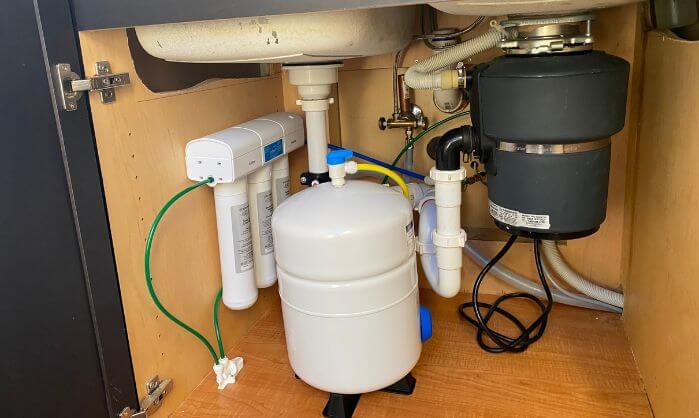
Some households also benefit from separate reverse osmosis equipment for drinking water or conventional softening to manage excessive hardness.
The advantage of this arrangement is that treatment components can complement one another.
Preliminary filtration may help protect downstream equipment from excessive particle accumulation, while subsequent stages address other water characteristics.
It’s a coordinated approach rather than a collection of unrelated filters.
Making Everyday Water Use More Enjoyable
The benefits of appropriate water treatment often reveal themselves during ordinary household routines.
Perhaps your morning coffee develops a more enjoyable flavor, or an unpleasant disinfectant odor becomes less noticeable during showering.
You might also find fewer visible particles collecting inside faucet aerators.
These improvements naturally depend on the original water conditions and the technologies installed.
There’s something appealing about having appropriately treated water available throughout connected areas of your home without maintaining separate filters at every faucet.
For busy families, reducing the number of little household responsibilities can be a welcome improvement in itself.
Looking Beyond the Initial Equipment Price
Water filtration represents an ongoing investment rather than a one-time purchase.
Replacement cartridges, specialized media, servicing, and electricity requirements for certain equipment can contribute to long-term ownership expenses.
Before choosing a system, ask about maintenance intervals and replacement component availability.
Consider accessibility, too. Routine servicing shouldn’t require emptying an entire utility cupboard or struggling with awkward plumbing connections.
Homeowners should also look for independently verified treatment performance relevant to their particular water concerns.
A system with fewer carefully selected stages may provide better value than expensive equipment containing unnecessary components.
Keeping Your Filtration Equipment Working Reliably
Even dependable filtration equipment needs occasional attention.
Sediment cartridges gradually collect debris, while activated carbon media eventually lose their treatment capacity.
Following manufacturer maintenance recommendations helps preserve filtration performance and suitable water flow.
Periodic water testing is also important, especially when equipment is intended to reduce potentially harmful contaminants.
Remember that clearer-looking or better-tasting water isn’t automatically safe drinking water.
Keeping a simple maintenance record can help prevent overlooked servicing responsibilities.
Making Better Water a Lasting Household Improvement
Improving household water quality doesn’t need to become an unnecessarily complicated project.
For Burton homeowners, the sensible approach is to understand existing water conditions, select suitable treatment technologies, and maintain the equipment consistently.
A thoughtfully designed filtration arrangement can address specific concerns while making familiar household activities more comfortable.
After all, water is something your family depends on every day. Giving its quality a little extra attention is an investment that can quietly improve everyday life for years to come.