Water is something most of us take for granted. We turn on the kitchen faucet, fill a glass, make coffee, and move on with our day. Because the water looks clear, it’s easy to assume everything is perfectly fine. But not every water-quality issue can be seen, smelled, or tasted.
Nitrates are a good example. They can occur naturally in the environment, but elevated concentrations may become a concern, particularly for people who depend on groundwater. The tricky part is that nitrate doesn’t usually give you an obvious warning. If you’re concerned about it, testing is far more useful than guessing.
Why Nitrates Can End Up in Water
Nitrates are part of the natural nitrogen cycle. Plants need nitrogen to grow, and nitrate compounds can naturally exist in soil and water. The problem can arise when additional nitrogen enters groundwater.
Agricultural fertilizers are one possible source. Animal waste, septic systems, and certain land-use activities can also contribute under particular conditions. Rainfall can carry nitrogen compounds through soil, eventually affecting groundwater.
This doesn’t mean every property near farmland has a nitrate problem. Local geology, drainage, soil conditions, and the location of a water source all matter.
That’s why a water test is so important.
Can You Tell if Water Contains Nitrates?
Unfortunately, you generally can’t identify nitrate by looking at a glass of water. When water contains nitrates, it can still appear completely clear and normal.
There may be no strange smell or unusual flavor either. In other words, your senses aren’t a reliable nitrate detector.
Related brief: Why Custom Water Treatment Solutions Make More Sense Than One-Size-Fits-All Systems
A proper laboratory test can provide information about the concentration in the water. That gives homeowners something concrete to work with instead of relying on assumptions.
Testing is particularly useful for private wells because homeowners are responsible for monitoring their own water supply. If you haven’t tested your well water recently, checking its quality can be a sensible precaution.
Why Boiling Water Isn’t the Answer
When people hear about a substance in drinking water, one of the first thoughts is often, “Can I just boil it?”
Unfortunately, boiling water isn’t a general solution for nitrate concerns. Heating water can kill certain microorganisms, but it does not remove nitrate. In fact, if water is boiled for a long time and some of the water evaporates, dissolved substances can become more concentrated.
So, if testing shows elevated nitrate levels, boiling isn’t an appropriate replacement for a treatment system designed to address nitrate.
That’s an important distinction because different water-quality problems require different solutions.
Start With a Proper Water Test
Before buying equipment, test the water.
A nitrate test can tell you whether nitrate is present and provide a measurement of the concentration. Depending on your situation, a broader water-quality test may also be useful.
Testing is especially important when dealing with a private well. Changes in nearby agriculture, flooding, drainage, septic systems, or other environmental conditions can potentially affect groundwater over time.
Think of testing as the first step in diagnosing the problem. You wouldn’t replace random parts in a car without figuring out what’s wrong. Water treatment deserves the same practical approach.
What Treatment Options Are Available?
Once testing confirms a nitrate concern, you can start looking at appropriate treatment technologies.
Ion exchange is one option. These systems use specialized resin to exchange certain ions in water and can be designed to reduce nitrate under suitable conditions.
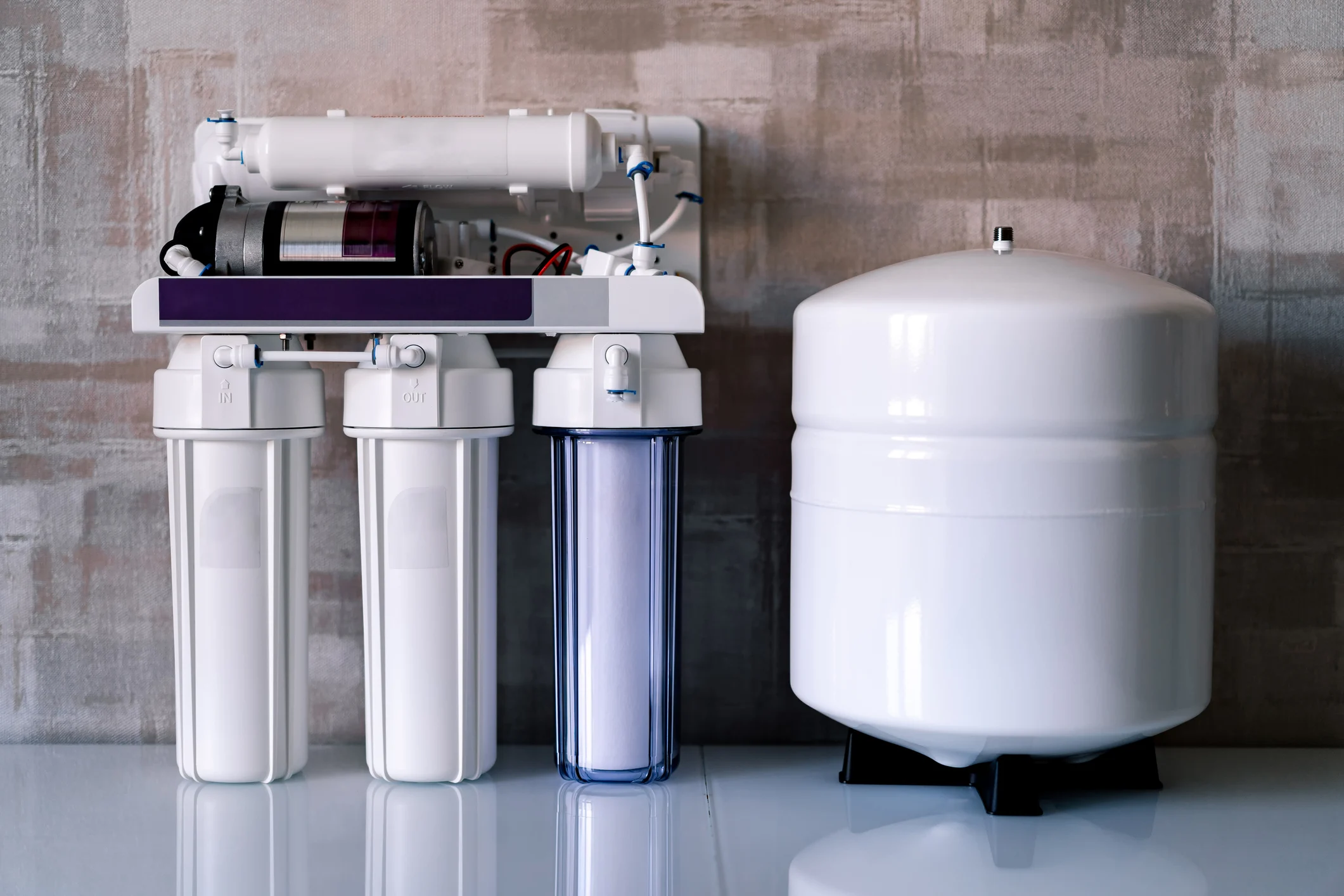
Reverse osmosis is another common approach, particularly for drinking and cooking water. A properly designed reverse osmosis system can reduce many dissolved substances by pushing water through a semipermeable membrane.
The right choice depends on several factors, including nitrate concentration, water chemistry, household demand, and whether treatment is needed throughout the home or only at a drinking-water tap.
There isn’t a universal “best” system.
When a Well Needs Special Attention
If you’re relying on a well for nitrates, regular monitoring becomes particularly important because private groundwater sources don’t have the same centralized oversight as public water supplies.
That doesn’t mean a private well is automatically unsafe. Many households use wells successfully for years. The point is simply that the homeowner has to take an active role in understanding what’s in the water.
Testing can establish a baseline. Future results can then be compared with earlier ones, which may help identify changes.
If a well has previously shown elevated nitrate levels, following the testing recommendations of an appropriate water professional or local authority can be especially worthwhile.
Point-of-Use Treatment Can Be a Smart Choice
Not every nitrate concern requires treatment of every gallon entering the house.
If the main concern is drinking and cooking water, a point-of-use system can concentrate treatment where it’s actually needed. This can be installed at a kitchen faucet or another dedicated drinking-water location.
Reverse osmosis is commonly used in these applications. The advantage is straightforward: instead of treating water used for laundry, showers, and cleaning, you’re focusing treatment on water intended for consumption.
Of course, the system still needs proper maintenance. Filters and membranes have limited service lives and should be replaced according to the manufacturer’s recommendations.
Whole-House Treatment Is Another Option
In some situations, a whole-house treatment system may make more sense.
This approach treats water as it enters the property, providing treated water throughout the home. However, it also means treating significantly more water, which can affect equipment size, installation requirements, operating costs, and maintenance.
If nitrate is primarily a drinking-water concern, whole-house treatment may be more than necessary. If there are broader reasons to treat the household supply, it could be worth considering.
The decision should come from the test results and the home’s actual needs—not from a generic sales package.
Don’t Forget About Maintenance
Installing a treatment system isn’t the finish line.
Filters need replacement. Reverse osmosis membranes eventually require changing. Ion-exchange equipment may require regeneration or servicing. And periodic water testing can help confirm that treatment continues to perform as expected.
Keep a simple record of maintenance dates and test results. It doesn’t need to be complicated. A calendar reminder is often enough.
Neglected equipment can lose effectiveness over time, which defeats the purpose of installing it in the first place.
Make the Decision With Facts, Not Fear
Nitrate concerns can sound intimidating, especially because the water may look completely normal. But the situation becomes much easier to manage when you break it down into sensible steps.
Test first. Understand the results. Consider possible sources. Then choose a treatment technology designed for the actual problem.
Don’t assume boiling will solve it, and don’t assume every filter removes nitrate. Ask what a system is designed to reduce, how it performs under your water conditions, and what maintenance it requires.
Ultimately, good water treatment isn’t about buying the most expensive equipment or following the latest trend. It’s about understanding your water and making a decision based on reliable information. With proper testing, suitable treatment, and regular maintenance, homeowners can take a thoughtful approach to water quality and feel more confident about what comes out of the tap.